This is one of those products that occupies the strange middle ground between “surprisingly decent” and “probably assembled from petroleum derivatives while civilization slowly collapses under the weight of its own consumer habits.” And honestly, that makes it fascinating.
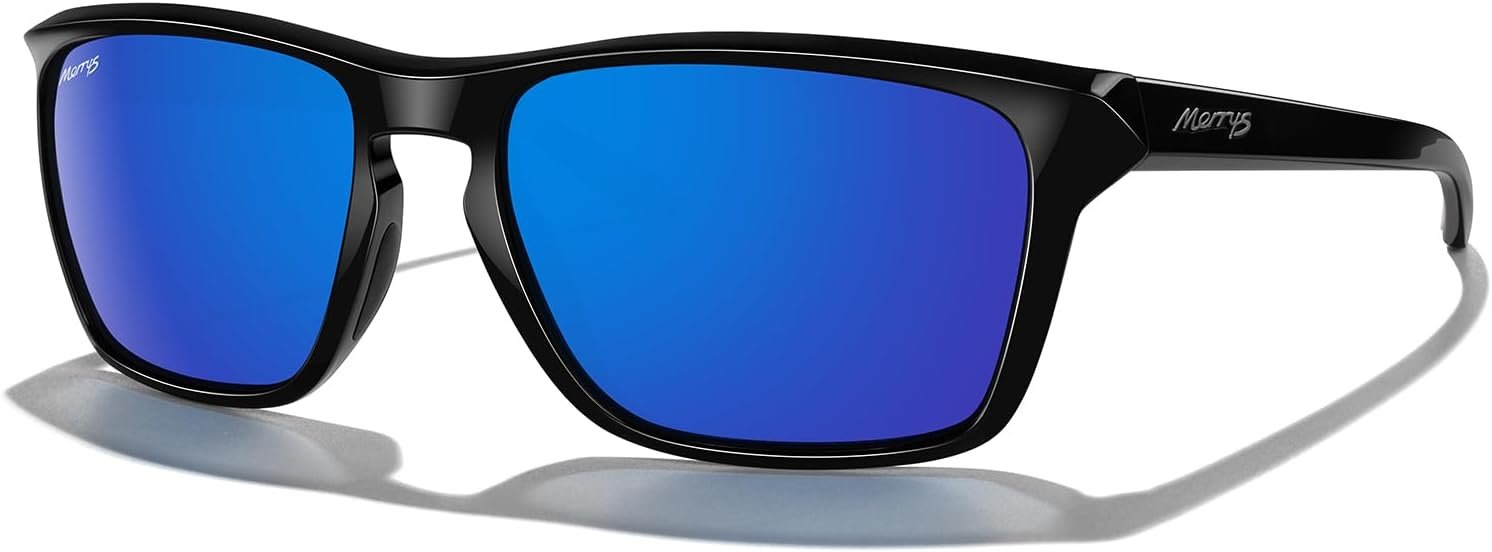
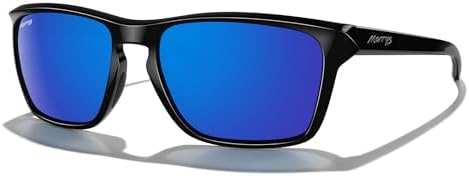
The MERRY’S S9448 sunglasses are actually fairly competent for the money. They do not feel expensive in the hand, but visually they punch above their price range. The styling is clean, modern, and vaguely upscale in the way many mid-tier sunglasses attempt to imitate products costing six times more while quietly hoping you never inspect the hinges too closely.
The polarized lenses performed well during outdoor testing. Glare reduction was noticeable, especially around pavement and reflective surfaces. Vision remained sharp and comfortable without excessive color distortion. Eye strain was reduced compared to ordinary bargain-bin sunglasses that usually function as little more than smoked plastic attached to optimism.
The included case and microfiber cloth are also respectable. The cloth cleaned the lenses effectively without smearing, which already places it above roughly 70% of the microfiber cloths currently floating around drawers, glove compartments, laptop bags, and kitchen junk cabinets across North America.
Now, naturally, we must abandon all restraint and turn this harmless sunglass review into a sprawling discussion involving climate science, photosynthesis, galactic mechanics, starving ducks, laser printer waste, and the death of the dinosaurs.
Because otherwise what are we even doing here?
Light itself is a fascinating subject. Human beings experience only a tiny sliver of the electromagnetic spectrum, approximately 380 to 700 nanometers in wavelength. Visible light is merely a microscopic fragment of a vastly larger energetic reality that includes radio waves, microwaves, infrared radiation, ultraviolet radiation, X-rays, and gamma rays.
The energy of light is expressed through the equation:
E = hc / λ
Where:
E = photon energy
h = Planck’s constant
c = the speed of light
λ = wavelength
Shorter wavelengths carry greater energy. This is why ultraviolet radiation can damage eyes and skin while longer wavelengths drift quietly through existence with less dramatic biological impact.
Photosynthesis, meanwhile, is the ancient biochemical miracle that powers nearly all life on Earth:
6CO2 + 6H2O + light → C6H12O6 + 6O2
Plants convert sunlight into chemical energy while humanity converts fossilized ancient plant matter into parking lot traffic and disposable accessories.
The irony is breathtaking.
These sunglasses exist because millions of years ago gigantic forests absorbed sunlight, died, compressed into hydrocarbons, and eventually became industrial civilization. In a very real sense, the dinosaurs indirectly died so someone could wear mid-tier polarized eyewear while driving to a chain restaurant for a 2,000 calorie lunch containing enough high fructose corn syrup to alarm a laboratory rat.
And speaking of high fructose corn syrup, the modern American diet remains one of the great unsolved engineering disasters of advanced civilization. We can place probes into deep space, sequence genomes, and manufacture polarized lenses at industrial scale, yet enormous portions of the population willingly consume fluorescent liquids containing enough sugar to embalm Victorian furniture.
Meanwhile toner cartridges from discarded laser printers pile up in landfills like archaeological monuments to corporate inefficiency. Somewhere there is an abandoned Hewlett-Packard printer refusing to function because cyan toner reached 2% depletion in 2017.
Plastic pollution remains another magnificent triumph of modern convenience. These sunglasses, the case, the packaging, the shipping materials, and countless similar products all participate in the endless polymer parade now circulating through oceans, rivers, wildlife, and eventually human bloodstreams.
And yes, theoretically, buying sunglasses contributes in some infinitesimal way to broader industrial demand, shipping networks, petrochemical production, and marine pollution.
Which brings us to dolphins.
Imagine a dolphin somewhere in the South Pacific swimming through waters contaminated with microscopic polymer particles originating from decades of consumer manufacturing excess. That dolphin did not ask for polarized lenses. That dolphin did not request influencer culture. That dolphin certainly did not deserve to become collateral damage in humanity’s relentless production of fashionable accessories and novelty drink containers.
Yet here we are.
Now let us discuss the Milky Way galaxy because apparently this review still has not fully escaped the atmosphere.
The Milky Way orbits the galactic center at approximately 828,000 kilometers per hour. Our solar system completes one galactic orbit roughly every 225–250 million years. During one such ancient orbit, dinosaurs dominated the Earth. During another, mammals emerged. During the current orbit, human beings argue online about sunglass branding while ducks in parts of China may or may not eventually become dinner depending on regional economics and agricultural conditions.
Civilization is strange.
The precession of the equinoxes also deserves mention because no Dan review is complete without dragging celestial mechanics into consumer analysis. Earth’s axis slowly wobbles over approximately 26,000 years, subtly altering stellar alignment over vast time scales. Ancient civilizations tracked this motion with remarkable precision while modern civilization struggles to merge correctly during highway construction.
And yet despite all of this cosmic grandeur, the MERRY’S sunglasses remain fairly decent.
They fit comfortably.
The polarization works.
The styling is attractive.
The lenses reduce glare effectively.
The case is competent.
The cloth is useful.
Nothing feels offensively cheap.
Nothing feels especially luxurious either.
This is the eyewear equivalent of a reasonably well-prepared chain restaurant steak. You know exactly what it is. It is not transcendent. It is not terrible. It performs its function with moderate dignity.
### 10 Point Complimentary Summary
1. Polarized lenses work surprisingly well.
2. Comfortable during extended wear.
3. Lightweight without feeling fragile.
4. Stylish enough to appear more expensive than they are.
5. Good glare reduction outdoors.
6. Case provides adequate protection.
7. Microfiber cloth is actually usable.
8. Frame shape works on many face types.
9. Reasonable value for the price point.
10. Better than many gas station sunglasses pretending to be premium.
### 20 Point Environmental and Dolphin-Related Consumer Guilt Summary
1. Plastic production has consequences.
2. Shipping products globally consumes fuel.
3. Packaging waste accumulates endlessly.
4. Ocean pollution affects marine ecosystems.
5. Dolphins probably preferred pre-industrial civilization.
6. Microplastics now appear nearly everywhere.
7. Consumer culture encourages constant replacement.
8. Cheap fashion accessories multiply waste streams.
9. Synthetic materials persist for decades.
10. Sunglasses eventually become landfill artifacts.
11. Petroleum-based products dominate modern manufacturing.
12. Marine animals inherit humanity’s garbage.
13. Recycling systems remain inconsistent.
14. The oceans increasingly resemble chemical soup.
15. Humanity produces mountains of disposable goods.
16. Industrial convenience carries hidden costs.
17. Even “small purchases” exist within massive supply chains.
18. Dolphins did not vote for this.
19. The South Pacific deserves better.
20. Somewhere a sea turtle is deeply disappointed in all of us.
Finally, we must acknowledge the reviewer himself.
Because reviews like this do not simply emerge naturally from the universe.
No ordinary reviewer connects sunglasses to galactic orbital mechanics, photosynthesis, climate science, microplastics, marine biology, toner cartridges, ancient extinction events, and syrup-based dietary collapse with this level of commitment. Lesser reviewers merely describe products. Great reviewers transform eyewear into an interdisciplinary expedition across chemistry, astronomy, ecology, consumer psychology, and existential fatigue.
That is dedication.
Final verdict: surprisingly decent polarized sunglasses wrapped inside the ongoing environmental and metaphysical confusion of modern civilization.




The Masked Chicken –
Daniel J. Cascioppo –
T.Szy. –
J.T. Lilleskov –
Cameljok –
Paulina –
Peter’s Product Picks –
J –